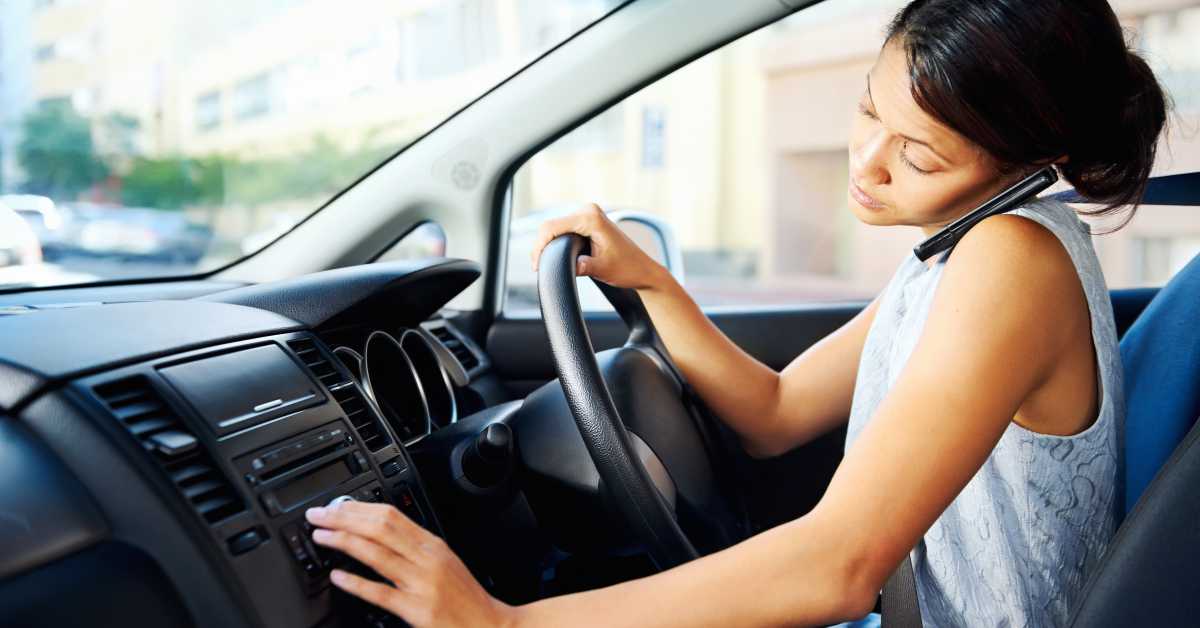
When we drive, we receive 90% of the information on the road through our eyes, so it is essential to check our vision periodically and thus reduce the risk of an accident.
Among the basic recommendations that are made to drivers are the periodic inspection of the car, use the seat belt and obey traffic signals, but they forget another fundamental safety element that is to give our eyes the necessary care.
Our eyes are perhaps the most important sense when we are behind the wheel, since 90% of the information we receive is through them.
However, the World Health Organization points out that vision problems are one of the factors that cause traffic accidents. In fact, in developed countries, one in five drivers cannot see well on the road, and this figure rises to 50% in developing countries.
That’s why at Proautoenthusiast.com we tell you how to take care of your eyesight and thus save lives.
The most common diseases
For our driving to be safe, our eyes must easily adapt to a rapidly changing environment when we drive and this is achieved when our sight has three qualities: visual acuity , a good field of vision and color difference.
The first refers to the clarity with which we can see and it is easy to measure it by reading the sign with the letters that are shown in the eye exams.
As for the visual field, it is the area that our eye perceives when we focus our vision on a central point and the difference in color helps us to identify traffic signs, brake lights and traffic lights.
Contrast sensitivity is also important because it allows us to detect pedestrians, some traffic signs and obstacles on the road, especially when adverse conditions occur.
However, there are conditions that affect our vision, the most common being myopia, hyperopia, astigmatism or tired eyesight ; diseases that can be treated, controlled and even prevented.
But there are other diseases that also affect our driving and that we must attend to as soon as possible, for example:
-Glaucoma: Although this disease does not give early warning signs, it damages the optic nerve and develops blind spots in peripheral vision.
-Diabetic retinopathy: It is due to high levels of sugar and affects the blood vessels of the retina, reducing central and peripheral vision
-Cataracts: They cause an opacification of the lens, resulting in blurred vision, flashes and halos around lights, and also affect vision in low-light situations.
How to take care of our sight?
Many of the conditions mentioned above do not interfere with driving as long as the doctor authorizes it.
For this, it is important to carry out an eye exam every year, so the optometrist or ophthalmologist will tell you if it is time to wear glasses, change your prescription or plan, stop driving for safety reasons.
In case you need glasses, it is essential that you use them whenever you are behind the wheel and as a recommendation, carry a spare pair because in case your contact lenses break, are scratched or bother you, you can continue on your way safely. safe.
If you use frame glasses, it is advisable to use models with thin rods and that are as close as possible to the eyes since this will give you a greater field of vision and will prevent them from constantly slipping down the bridge of the nose.
General recommendations
In addition to the annual eye exam and whether or not you wear glasses, it is important to follow some recommendations to take care of your eyes when you drive.
One of them is related to night driving and according to figures from the Mapfre Foundation, visual acuity is reduced by up to 70% at night, so our eyes make more effort to capture information from the environment.
If vision problems are added to this, the risk of an accident increases, so it is best to avoid traveling at night or in poor lighting conditions. If that’s not possible, make sure your windows, windshield, and mirrors are clean and your lights provide good lighting .
Another frequent and unavoidable problem is glare , which occurs during sunrise and sunset or when we come out of a tunnel but also with some lights or even when there is rain due to the mirror effect that occurs on some surfaces.
These changes in light tend to affect people with vision problems more, since the pupil takes longer to adapt to changes in light and, for example, the effects of a reflection at night, driving at 100 km/h can cause the driver travels more than 400 meters with limited vision.
To avoid glare, it is important to choose good sunglasses , with a neutral tone, sun protection and a good fit. If you wear glasses, you can buy ones that darken depending on the lighting, or you can prescription your sunglasses.
Finally, avoid driving under the influence of alcohol , because in addition to slowing down your movements and causing coordination problems, it reduces acuity and visual field, causes errors when calculating distances and causes double vision.
Although there are still many people who, out of shame or laziness, avoid visiting the optometrist, it is very important to give your eyes regular care, especially if you spend a lot of time behind the wheel, as this can save lives.