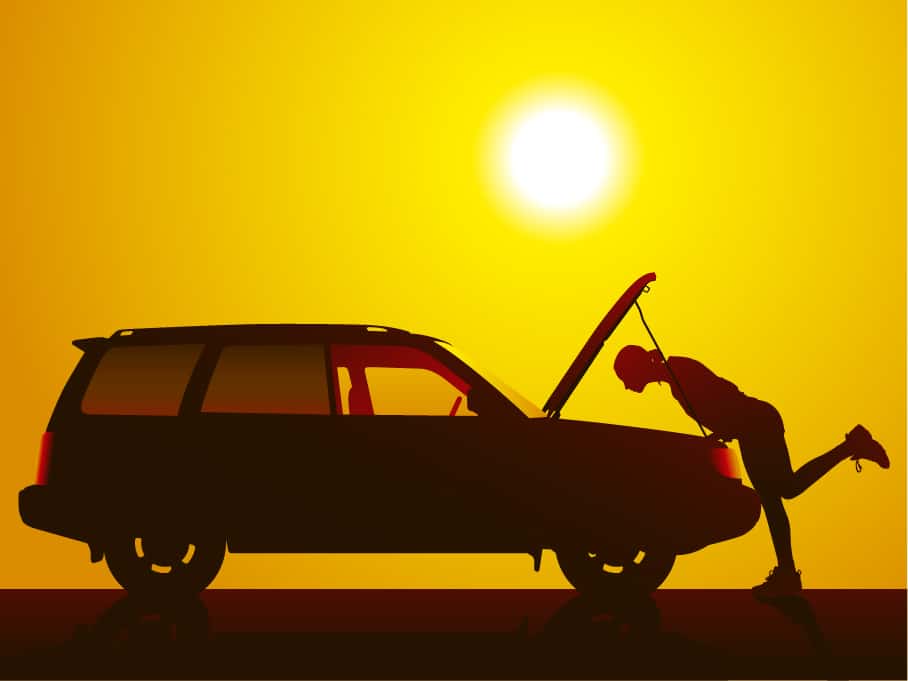
High temperatures can damage the operation of a car battery, so you must learn to identify the signals that your vehicle gives you.
1. How does heat affect a battery?
According to data from Mapfre, 80% of the faults that cars present are in the batteries during times when the weather is hot. This is due to the increase in temperature to which this component is exposed. It is known that temperatures greater than 20° cause greater wear on the batteries, causing them to discharge or reduce their lifespan.
This is because the internal components of a battery evaporate or dry out, thereby compromising the function of this component. It is estimated that damage caused by heat can reduce the energy capacity received by the car by 20% and the life of the internal components in the battery by 40%.
To measure the level of risk that a battery can have in Mexico, it should be noted that during the spring and summer the temperatures recorded in CDMX exceed 30°, reaching a thermal sensation of 32°, this means that a car exposed to the sun in the city can have battery failure.
If we move this case to states of the republic where temperatures can exceed 36°, the probability that the battery fails increases. There are signs that indicate that the heat is affecting the operation of the battery , which you must learn to identify.
2. 4 signs that heat is wreaking havoc on your battery
2.1. Variations in the electrical operation of the car
One of the signs that reflect the damage that heat causes in batteries is shown inside a car. When you are driving you should pay attention to the electrical components that your vehicle has, since the load variations will be directly reflected in them.
For example, problems with the level of intensity of external and internal lights are not always associated with bulbs. If you notice that the intensity decreases suddenly or steadily, the source of this fault may be in the battery . In the same way you should monitor the operation of the windows, if it becomes slower than normal it is an indicator of faults in the electrical distribution. The same happens with the air conditioning and the radio, since variations in the load can affect these components.
2.2. The life of your battery is shortened
Normally a battery lasts 3 to 5 years, following the correct care, but as mentioned above, heat can reduce its lifespan. If your car’s battery is not within the average range of years in which it should be changed, but is already failing, heat may be the factor that caused this. Check the voltage and keep track of how long you’ve been using that battery.
2.3. Problems booting or boot time is slow
It is the basic signal that shows a fault in a battery . This is because the charge level is low, something that can be associated with various factors, including the car’s exposure to high temperatures.
2.4. Fluid level in a lead-acid battery is low
Checking the fluid level can help you identify heat damage. Check that the amount of fluid in each cell is the same, if you find variations in the level, it means that high temperatures are affecting the operation of your battery and it is best to take the car to a workshop for a review. Do not miss these signs that can save you a hard time on your way to work.
3. Tips to Mitigate Heat Damage
We know that it is very difficult to completely avoid the ravages of heat. Despite this, there are some tips that can help you reduce heat damage to your battery . The first of them is to avoid direct exposure of the car to the sun, it is advisable to park in a shady place, or to keep your car in a garage.
Another useful tip to combat heat damage is to disconnect the battery when you get home or if you don’t plan to use it for some time, store it in a cool place so that the temperature does not cause liquids to evaporate. It is also recommended to clean periodically cables to ensure optimal performance.
Learning to start the car without a battery is a tip that can help you reduce wear and tear during hot seasons. To start the car without a battery you have two options, pass current using another car, or get a portable starter, these small devices provide the necessary energy for the car to start.
Finally, performing the necessary maintenance on the battery is the best measure to prevent the damage caused by heat. High temperatures affect the useful life of batteries, it is a fact. Knowing how to identify the signs that show that the time has come to repair or change it is the best thing you can do.